Can Concrete Be Poured in Cold Weather?
Yes. Concrete can be poured in cold weather when the fresh slab is protected while it cures. We pour block foundations, garage floors and pole barn floors through the winter, and we use concrete curing blankets to protect sidewalks and porches. Driveways and stamped concrete stay more seasonal.
Why Cold Weather Is Hard on Fresh Concrete
Fresh concrete needs warmth to cure. The water in a new slab reacts with the cement over the first days and weeks, and if that water freezes before the concrete gains strength, the surface can scale or crack. Cold-weather work comes down to keeping the fresh concrete warm enough, long enough.
How Curing Blankets Protect a Pour
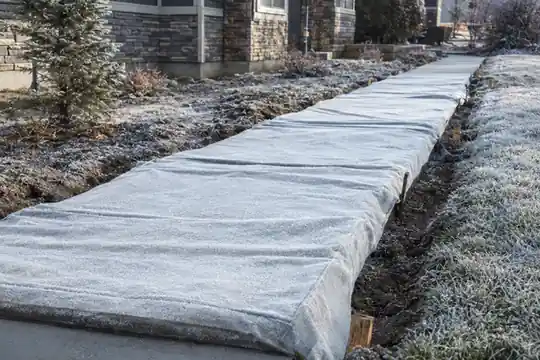
Curing blankets are insulated covers laid over a fresh slab once it’s finished. They hold in the heat the concrete gives off as it cures, which keeps the slab from freezing during the first critical days. We use them on sidewalks and porches so those jobs can go ahead in the cold months. Our Concrete Sidewalks page has pricing on small runs.
Jobs That Keep Going Through the Winter
Jobs that keep going through the winter are the ones the weather can’t easily reach:
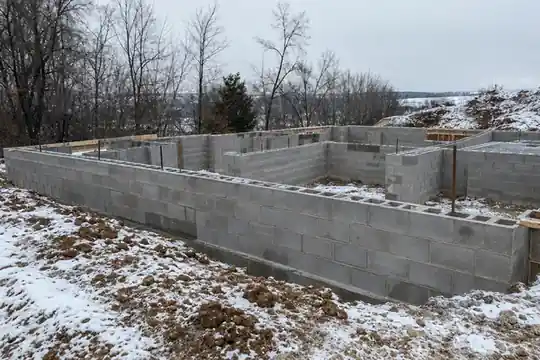
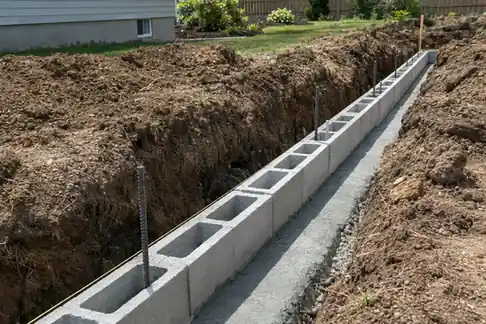
- Block foundations are below-grade work. The rule to respect is that a footing can’t bear on frozen soil, which New Castle County’s footing checklist spells out.
- Garage floors and pole barn floors are poured under a roof once the building shell is up.
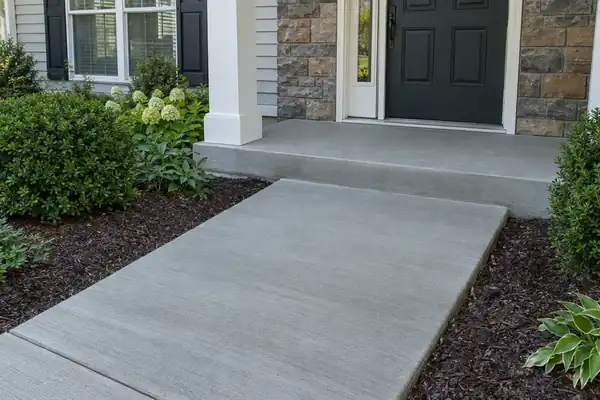
- Sidewalks and porches go ahead with curing blankets over the fresh slab.
Our post on winter concrete work goes through each of these in more detail.
How Cold Is Too Cold?
Cold weather, for concrete, starts earlier than most people think. The American Concrete Institute treats concrete work as cold-weather work once air temperatures fall, or are expected to fall, below about 40°F during the protection period. The goal is to keep the fresh concrete from freezing until it has gained enough early strength, which takes days rather than hours.
What to Ask Before a Winter Pour
Winter pours go smoothly when a few things are settled up front:
- How the fresh slab will be protected, and for how long
- Whether the ground under the slab is thawed, since concrete shouldn’t be placed on frozen ground
- What happens to the schedule if a hard freeze is forecast for pour day
Jobs That Wait for Warmer Weather
The jobs that wait for warmer weather are driveways and stamped concrete, the most weather-exposed work we do. A driveway is a large open slab with nothing over it, and stamped concrete needs steady conditions for the pattern and color work, so we schedule both around the forecast.