Which Concrete Jobs Can Be Done in Winter?
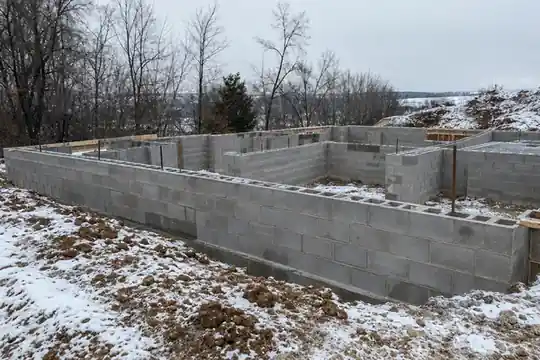
Block foundations, garage floors and pole barn floors keep going through the winter because they’re below grade or under a roof. Sidewalks and porches can also be poured in cold weather with concrete curing blankets. Driveways and stamped concrete are the most weather-exposed work and stay more seasonal.
Below Grade: Block Foundations
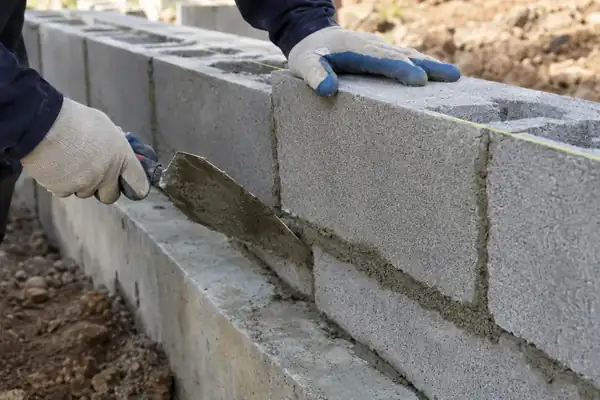
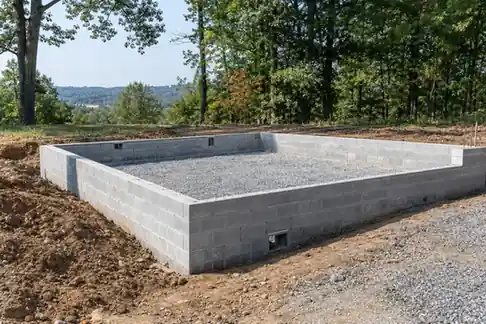
Block foundations are below-grade work, built down where the footer sits under the frost line. The firm rule is that a footing may not bear on frozen soil, which New Castle County’s footing checklist spells out. Our Concrete Block Foundations page has pricing.
Under a Roof: Garage and Pole Barn Floors
Garage and pole barn floors are poured once the building shell is up, so the slab sits under the roof line and out of most of the weather. Our Pole Barn Concrete Floors page covers that work.
Under Blankets: Sidewalks and Porches
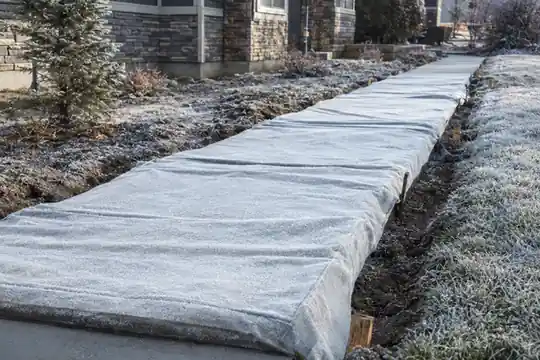
Sidewalks and porches go ahead in cold weather with concrete curing blankets, which hold in the heat the slab gives off while it cures. Our post on pouring concrete in cold weather explains how the blankets work.
Waiting for Spring: Driveways and Stamped Concrete
Driveways and stamped concrete are the jobs we schedule around the weather. Both sit fully exposed, and stamped work needs steady conditions for the color and pattern.
Planning a Winter Project
Planning a winter project starts with booking early, since the jobs that can run in the cold months fill up. Make sure the site is accessible for trucks in wet or frozen conditions, and settle with your builder when the shell will be up if the floor is going under a roof.
Why It Matters for Your Schedule
Your schedule can keep moving with a winter foundation or floor. If the framer, the pole barn builder or the general contractor is ready to go in February, the concrete doesn’t have to be what holds the project up.