
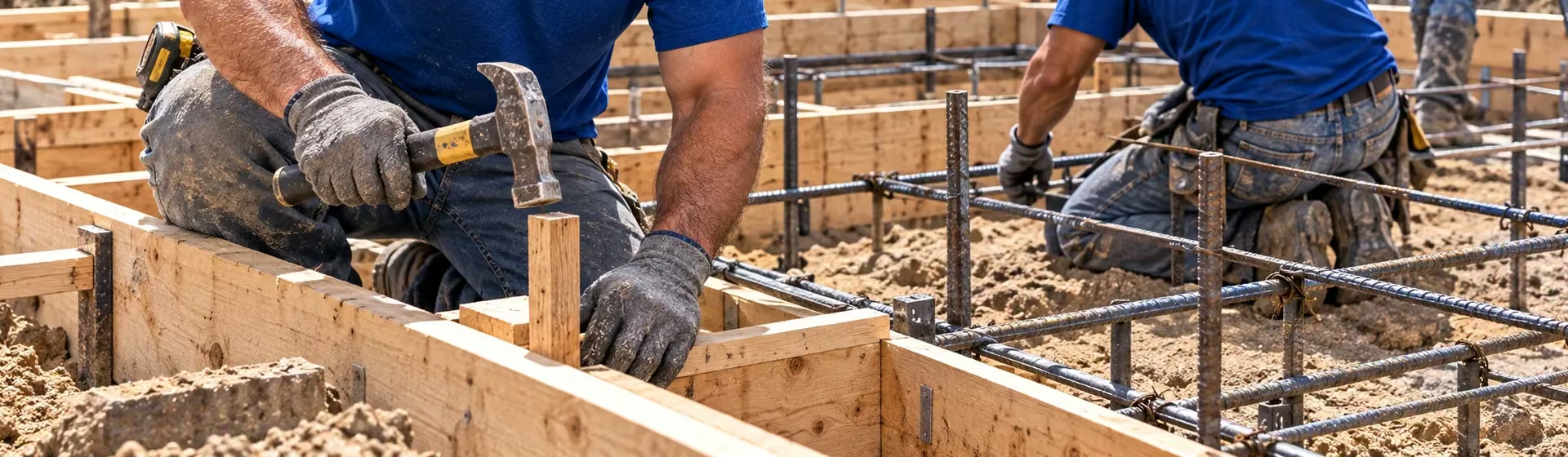
Concrete Block Foundation Construction in Cecil County, MD
For homeowners and contractors in Cecil County, MD and the surrounding counties planning a new foundation for a garage, pole barn, or home addition.
New garage, pole barn, or home addition? We pour the footer and lay the block foundation as one job, priced as one combined rate — not two separate estimates.
Why Customers Trust Tidewater
- MHIC Licensed #165168
- Insured — $1M/$2M
- 3-person crew
- Pours through winter
How We Price a Block Foundation
Block foundation work at Tidewater is priced one way: a single rate per linear foot that already includes the footer, not two separate estimates for footing and wall.
Starting at $50 per linear foot at 5 courses (40 inches high), including the footer. Additional courses add $10 per linear foot each. Every job gets a formal quote once we’ve seen the site — this is a starting price, not a final number.
For comparison, footing work alone runs roughly $10-15 per linear foot in published cost guides, and block wall construction $20-60 per linear foot depending on block type and reinforcement — two separate line items most contractors quote apart. Our combined rate folds both into one number.
Real Example From a Recent Job
A 20-by-28-foot garage foundation — 96 linear feet, 5 courses, 16 inches out of the ground — ran $5,000 to $6,000 including the footer. For reference, published project-level estimates for a 1,200-1,600 square foot footprint run roughly $12,000 to $40,000 depending on soil, depth, and finish tier, so a garage-sized foundation comes in well under the range for a full house footprint.
- Footprint
- 20 × 28 ft garage
- Wall length
- 96 linear ft
- Height
- 5 courses, 16 in above grade
- Footer
- Included
- Price
- $5,000–$6,000
Block vs. Poured Concrete Foundations
Block (CMU) foundations generally cost less than poured concrete walls, because poured walls need forms built on-site and more material per linear foot. Block goes up course by course from a modular unit, which keeps labor and material costs lower for most residential and outbuilding foundations.
Poured concrete can offer a more continuous, seamless wall with fewer joints, which matters more on a deep basement than on a garage or pole barn foundation. For the kind of work we do most — garages, pole barns, and additions — block is the more common and more cost-effective choice.

Block (CMU)
- Generally costs less
- Goes up course by course from a modular unit
- The common choice for garages, pole barns and additions
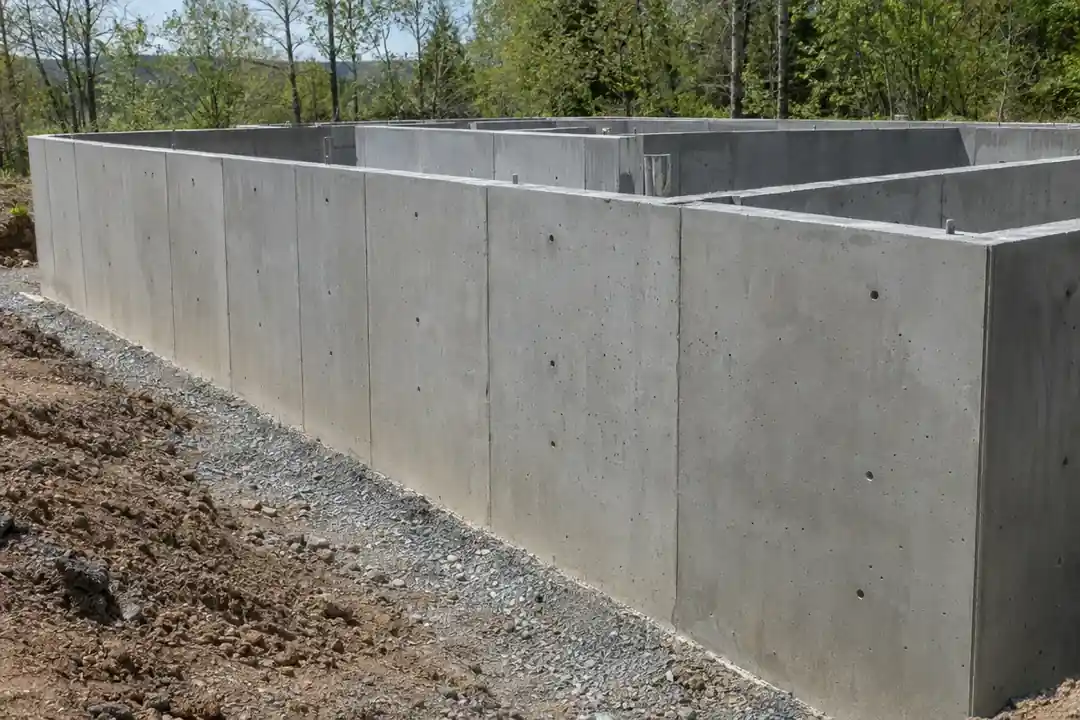
Poured Concrete
- Forms built on-site
- More material per linear foot
- A more continuous wall with fewer joints, which matters more on a deep basement
block foundation vs poured foundation cost
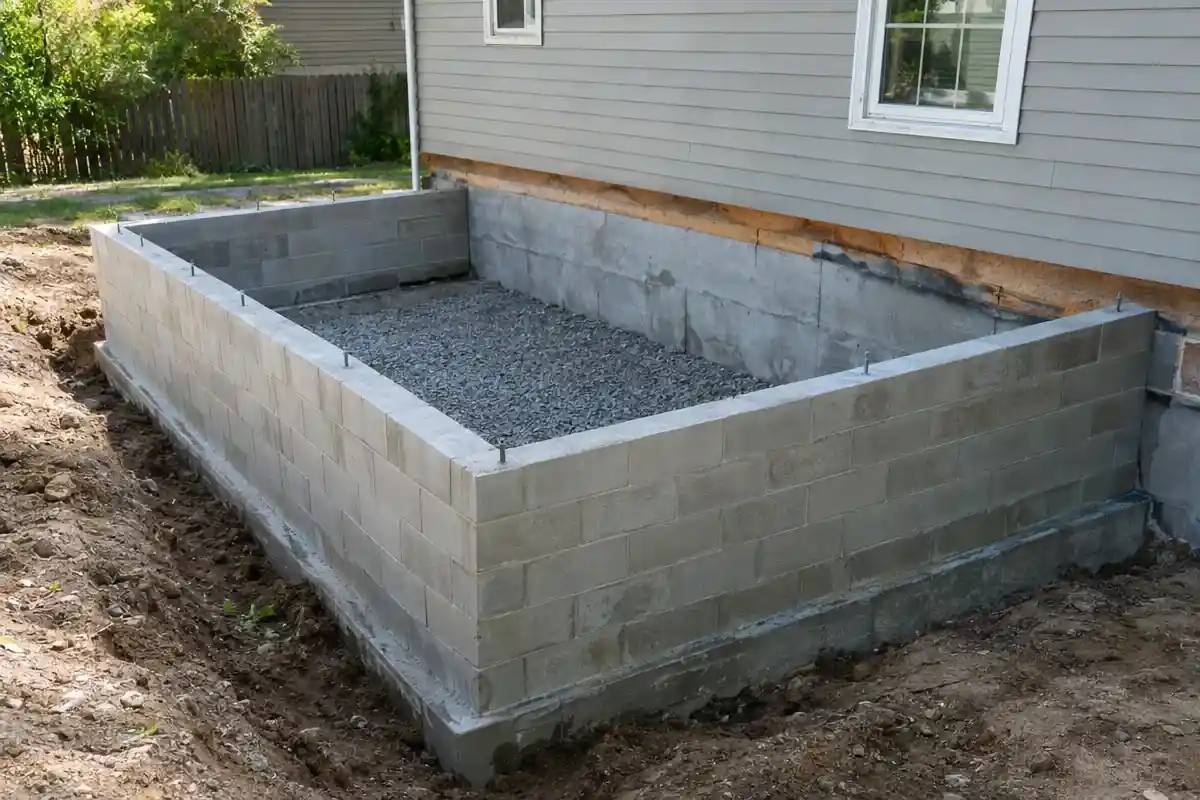
Addition Foundations
A foundation for a home addition uses the identical per-linear-foot model as new construction — the footer and block are priced the same way, whether the structure is a standalone garage or an extension of the existing house.
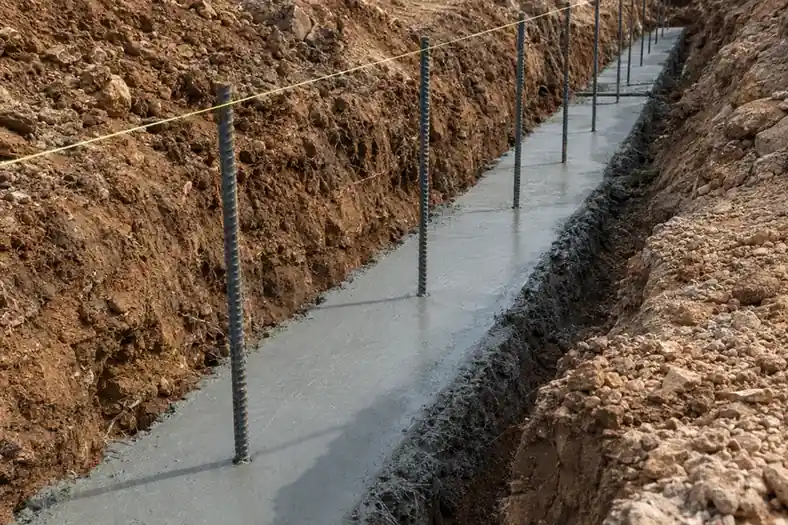
What’s Included: Footers
The footer is included in the linear-foot rate above — we don’t bill it as a separate line item. You’re quoted one number for the complete foundation, footer and block together.
Winter Block Foundation Work
Block foundations are one of the jobs we keep running through the winter months, when a lot of contractors pause flatwork or quote “weather permitting.” If your project timeline depends on getting a foundation in before spring, this is one of the services where that’s realistic.

Block Foundations Near You
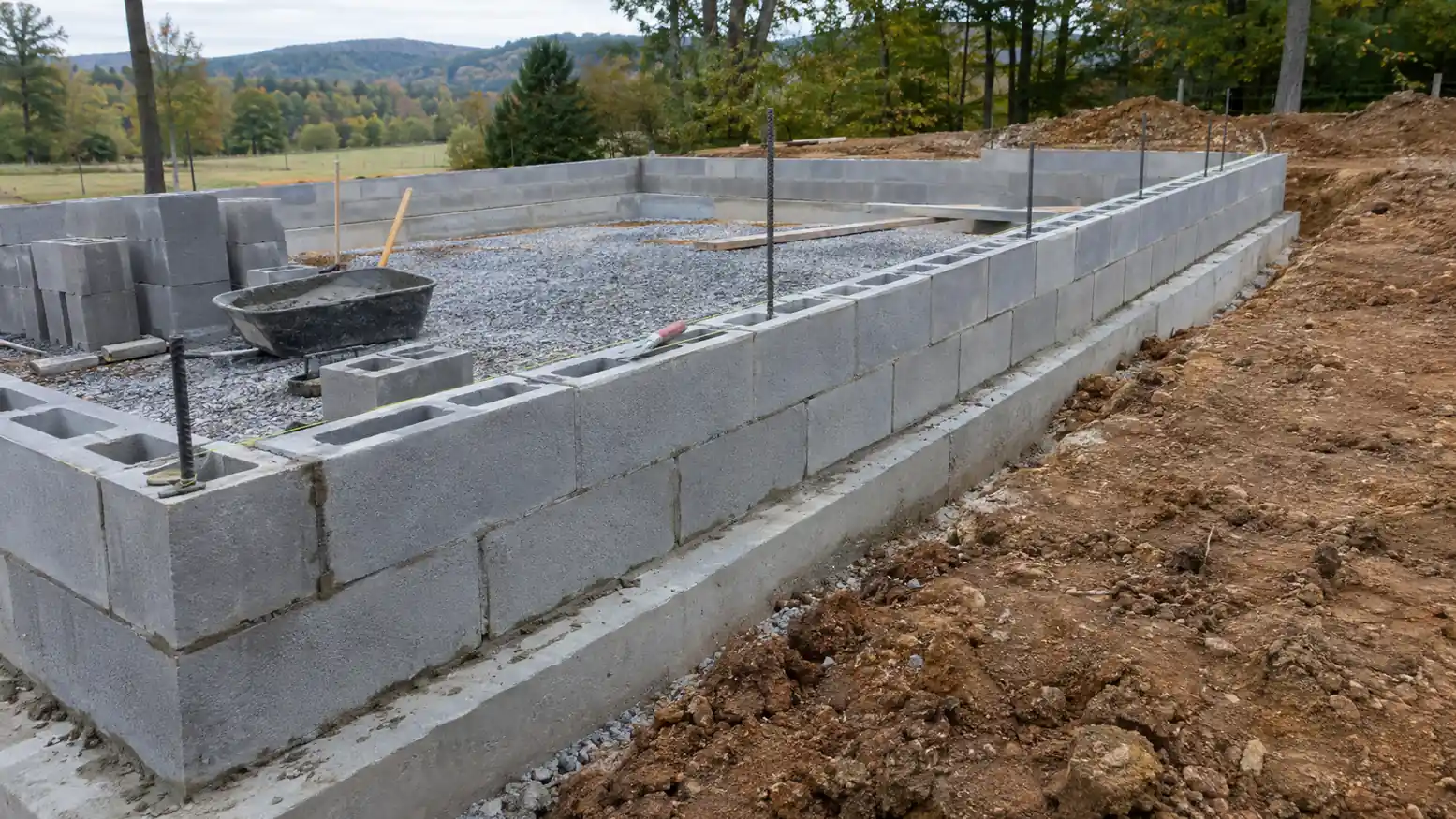
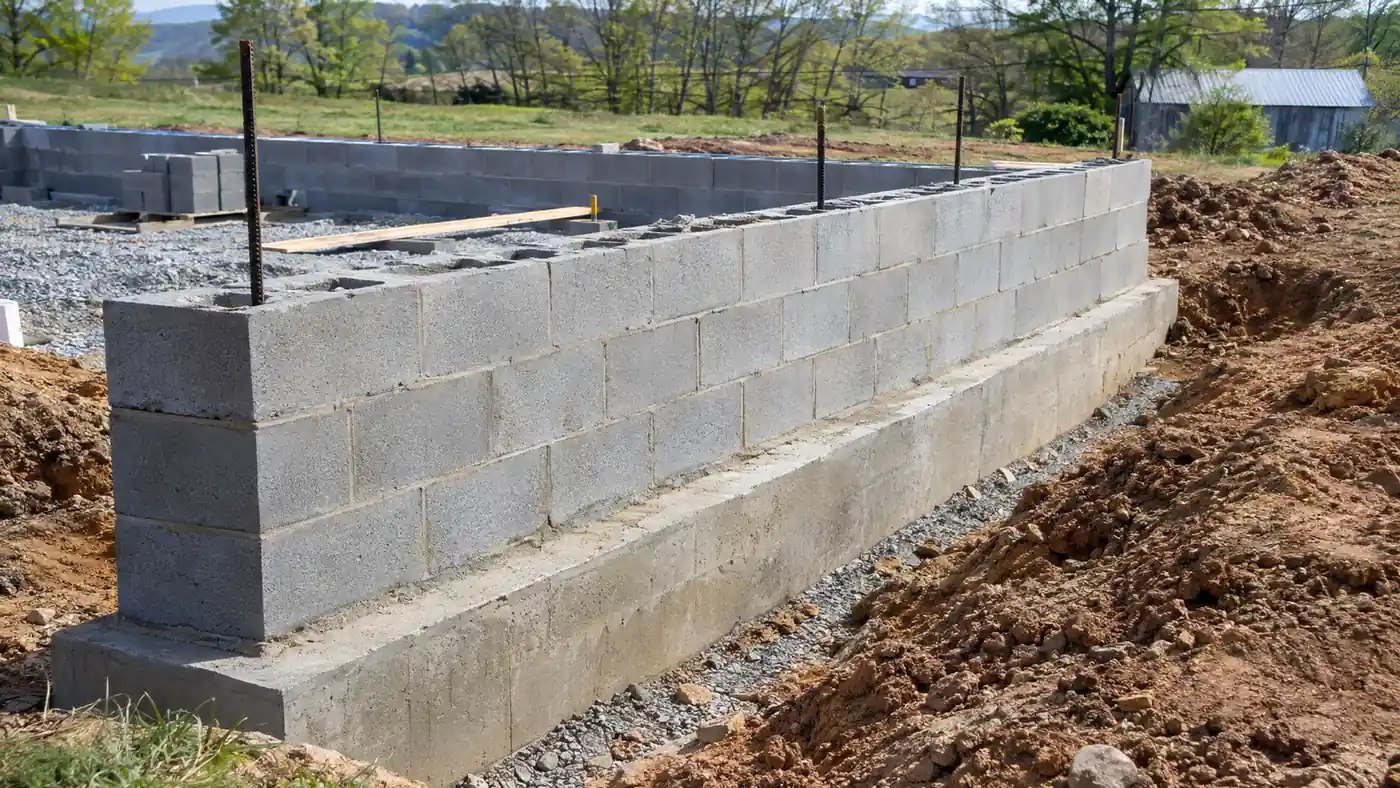
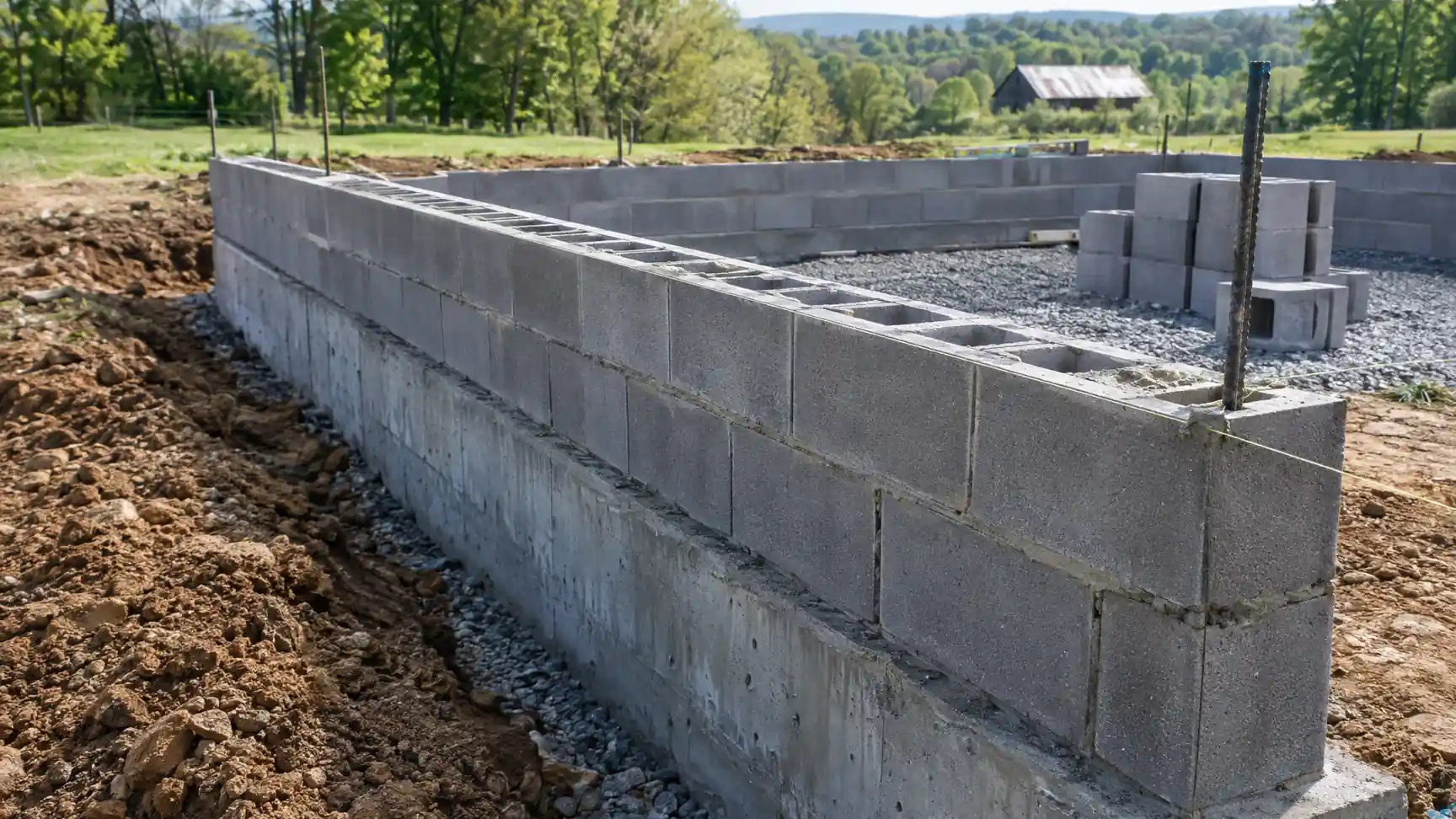

What Our Customers Say
“I hired Tidewater to pour the footer that I dug, they did the block masonry and poured the slab for the garage that I am building. I can’t say enough about the fabulous work and craftsmanship.”
Frequently Asked Questions
Is a block foundation cheaper than a poured concrete foundation?
Yes. Poured walls have a higher material cost and the forms are expensive.
How much does a block foundation cost?
Starting at $50 per linear foot at 5 courses, including the footer. A typical 20'x28' garage foundation (96 linear feet) runs $5,000-$6,000.
Do you handle addition foundations the same way?
Yes — addition foundations use the same per-linear-foot pricing model, including the footer and block.
Can block foundations be poured in winter?
Yes, this is one of the services we keep working on through the winter months.
Is the footer priced separately from the block wall?
No — the footer is included in the linear-foot rate for the foundation; you're quoted one combined price.
How many courses does a typical garage foundation need?
5 courses (40 inches high) is our standard starting point; additional courses add $10 per linear foot each depending on how far the foundation needs to extend above grade.
Do you pour foundations for pole barns?
Yes — pole barn foundations are priced the same way as garage and addition foundations, per linear foot including the footer.
Ready to Get Your Project Poured?
Tell us what you’re building. We’ll quote it from real starting prices and confirm the schedule, including winter dates for foundations and floors.