What Happens During a Block Foundation Job?
A block foundation job runs in order: a site visit and quote, the permit, digging and pouring the footer below the frost line, a footing inspection where the county requires one, laying the block course by course, backfilling, and then pouring the slab inside.
1. Site Visit and Quote
The site visit comes first, because every foundation gets a formal quote after we’ve seen the ground. Starting prices are $50 per linear foot at 5 courses with the footer included.
2. Permit
The permit comes from your county or town. In Cecil County that’s the Permits & Inspections Division in Elkton; in Delaware it depends on whether you’re in a town or county area.
3. Digging and Pouring the Footer
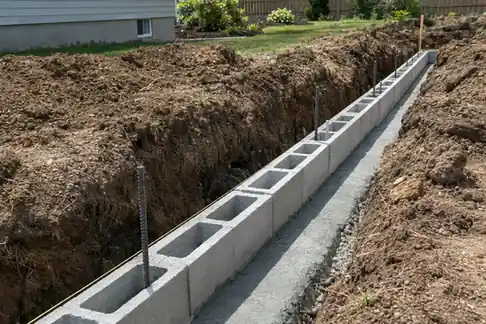
The footer trench is dug to depth first: 32 inches below grade in Cecil County and New Castle County. On some jobs the owner or general contractor handles the dig, so ask us how we’d handle yours. The footer is then poured on firm, unfrozen soil.
4. Footing Inspection
Footing inspections are part of New Castle County’s process: the county’s checklist covers footing depth, soil conditions and the footing’s size against the approved plans.
5. Laying the Block
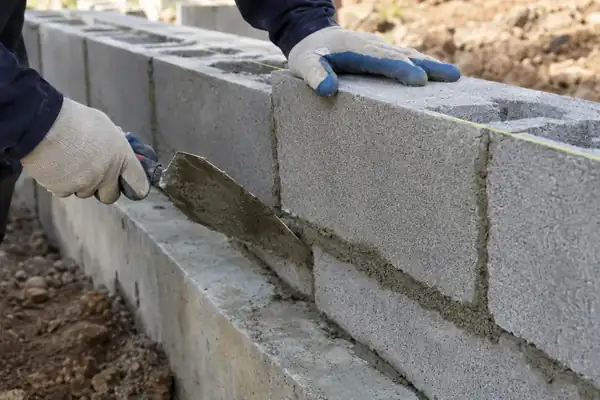
The block goes up course by course, 8 inches at a time, on top of the footer. Five courses is our starting point, and our post on what ’5 courses’ means explains why.
6. Backfill
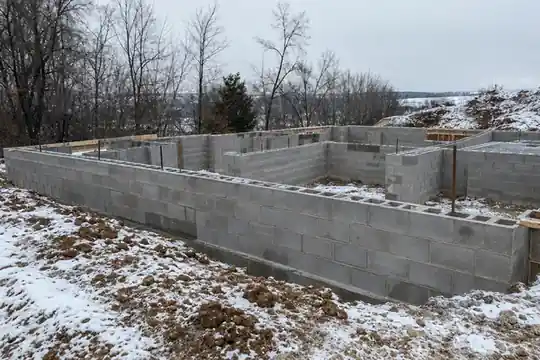
Backfill goes in once the wall is up. Where soil will push harder on one side of the wall than the other, called unbalanced backfill, the code looks closely at the wall’s reinforcement.
Before Work Starts
Before any digging starts, underground utilities need to be marked. Calling 811 (Miss Utility in Maryland and Delaware) a few business days ahead is free, and it’s required before excavation. Make sure trucks can reach the site as well.
7. The Slab
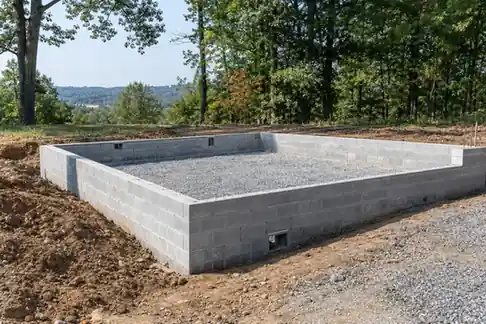
The slab is often the last concrete step. On one recent garage we laid the block and then poured the garage slab inside it. See our Concrete Block Foundations page for pricing.